
-
Mycol 50mg Injection (Rs.14.33)
Composition: Amphotericin B (50mg)
-
Ampholyn 50mg Injection (Rs.269)
Composition: Amphotericin B (50mg)
-
Amphotlc 50mg Powder for Injection (Rs.54.38)
Composition: Amphotericin B (50mg)
-
Amphotin 50mg (Rs.299)
Composition: Amphotericin B (50mg)
-
Neotericin 50mg Injection (Rs.165.27)
Composition: Amphotericin B (50mg)
-
Fungitericin Injection (Rs.281)
Composition: Amphotericin B (50mg)
-
Mycoflu Injection (Rs.326)
Composition: Amphotericin B (50mg)
-
Fungizone 50mg Injection (Rs.295.1)
Composition: Amphotericin B (50mg)
-
Amphozone 50mg Injection (Rs.635.63)
Composition: Amphotericin B (50mg)
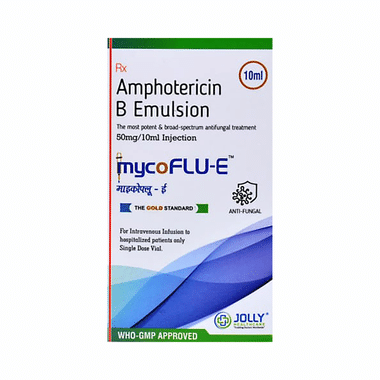
All Details About Mycoflu-E Injection
Find out detailed description, uses, directions of use, side effects, warnings and precautions, frequently asked questions about Mycoflu-E Injection
Description:
Mycoflu-E Injection is an antifungal medication. It is used in the treatment of severe fungal infections and kala-azar. It kills the infection causing fungi and thus, treats the infection.Mycoflu-E Injection is administered as an injection by a healthcare professional. Compassionately do not self administer. Earlier you take this medicine, inform your doctor if you suffer from diabetes, liver/kidney problems or are on dialysis or have low potassium level in blood.
It may lead to a few common side effects like headache, vomiting, nausea, stomach cramps and fever. You may also notice some injection site reactions like pain, swelling or redness. Inform your doctor if these side effects persist for a longer duration. Please consult your doctor if you are pregnant, planning to conceive or breastfeeding.
Uses:
- Severe fungal infections
- Kala-azar
Directions For Use:
Your doctor or nurse will give you this medicine. Compassionately do not self administer.Side Effects:
Most side effects do not require any medical attention and disappear as your body adjusts to the medicine. Consult your doctor if they persist or if you’re worried about themOrdinary side effects of Mycoflu-E
- Injection site reactions (pain, swelling, redness)
- Nausea
- Vomiting
- Chills
- Headache
- Anemia (low number of red blood cells)
- Decreased potassium level in blood
- Abnormal liver function tests
- Decreased magnesium level in blood
- Diarrhea
- Decreased appetite
- Hypotension (low blood pressure)
- Skin rash
- Nephrocalcinosis
- Increased creatinine level in blood
- Abnormal renal function tests
- Renal tubular acidosis
Warning & Precautions:
However, inform your doctor if you have any underlying kidney disease.
FAQs:
Q. Is Mycoflu-E Injection fungistatic or fungicidal?
Q. Is Mycoflu-E Injection light sensitive?
Q. What is Mycoflu-E Injection liposomal?
Q. Is Mycoflu-E Injection an antibiotic?
Q. Is Mycoflu-E Injection testing dose needed?
Q. How is Mycoflu-E Injection administered?
Q. How does Mycoflu-E Injection cause nephrotoxicity and hyperkalemia?
Written by:
Dr. T. Sharmila Krishna
M.B.B.S., MD (Biochemistry)
Reviewed by:
Dr. Sureshbabu Yadav
M.B.B.S., DIP.DIAB, F.R.S.H
Disclaimer:
Getomeds primary intention is to ensure that its consumers get information that is reviewed by experts, accurate, and trustworthy. The information and contents of this website are for informational purposes only. They are not intended to be a substitute for professional medical advice, diagnosis, or treatment. Please seek the advice of your doctor and discuss all of your concerns about any disease or medication. Do not disregard or postpone seeking professional medical advice because of something you read on Getomeds. Our mission is to support, not replace, the doctor-patient relationship.