
Home/Products/Capnea Injection/

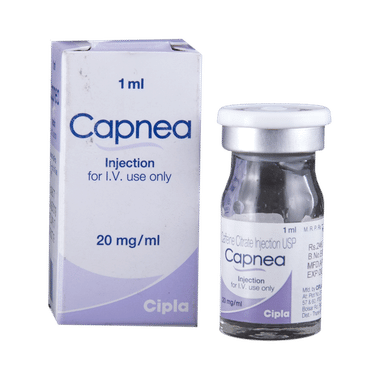
Capnea Injection 2.0 ml in 1 vial

Last Updated:

Capnea Injection is a product of Cipla Ltd

Composition: Caffeine (20mg/ml)

Pack of 2 ml

535.20

Note: MRP can vary depending up on batch!

*MRP inclusive of all taxes
Related Products

All Details About Capnea Injection

Find out detailed description, uses, directions of use, side effects, warnings and precautions, frequently asked questions about Capnea Injection

Description:

Capnea Injection is a prescription medicine used in the treatment of apnea (a disorder in which breathing repeatedly stops and starts) of prematurity. It facilitates normal breathing and reduces interrupted breathing in premature newborns.

Capnea Injection is given under the supervision of healthcare professionals. Remember, if you are breastfeeding while your infant is treated with this medicine, then do not drink coffee or take any other high caffeine product as this passes into breast milk.

Some common side effects of this medicine include mild delirium, insomnia, frequent urge to urinate, dehydration, tachycardia, and fever. Consult your doctor if these do not go away or persist for a longer duration. They may be able to suggest ways to prevent or reduce the side effects.

Uses:

  • Apnea of prematurity

Directions For Use:

Your doctor or nurse will give you this medicine. Compassionately do not self administer.

Side Effects:

Most side effects do not require any medical attention and disappear as your body adjusts to the medicine. Consult your doctor if they persist or if you’re worried about them

Ordinary side effects of Capnea

  • Delirium (acute confusional state)
  • Dehydration
  • Fever
  • Insomnia (difficulty in sleeping)
  • Frequent urge to urinate

Warning & Precautions:

Alcohol
UNSAFE
It is unsafe to consume alcohol with Capnea Injection
Pregnancy
CONSULT YOUR DOCTOR
The safety of Capnea Injection during pregnancy has not been established. There are no adequate and well-controlled studies in pregnant women, and animal data on reproductive toxicity are insufficient. Your doctor will weigh the benefits and any potential risks before prescribing.
Breast feeding
CAUTION
Capnea Injection should be used with caution during breastfeeding. Breastfeeding should be held until the treatment of the mother is completed and the drug is eliminated from the body.
Driving
UNSAFE
Capnea Injection may decrease alertness, affect your vision, or make you feel sleepy and dizzy. Do not drive if these symptoms occur.
Kidney
CONSULT YOUR DOCTOR
There is limited data available on the use of Capnea Injection in patients with kidney disease. Please consult your doctor.
Liver
CONSULT YOUR DOCTOR
There is limited data available on the use of Capnea Injection in patients with liver disease.

FAQs:

What is Capnea Injection and why is it used in newborns?

Capnea Injection is a medicine given to premature babies who have apnea of prematurity. This condition causes infants to stop breathing for short periods because their breathing system is not fully developed. Capnea Injection helps stimulate the baby’s brain and lungs to improve breathing.

How does Capnea Injection work in premature babies?

Capnea Injection works by stimulating the central nervous system and the baby’s breathing center. It makes the brain more responsive to carbon dioxide and helps reduce episodes where the baby stops breathing. It also improves muscle tone and decreases fatigue of the diaphragm, the muscle that controls breathing.

Who should not receive Capnea Injection?

Capnea Injection should not be given to infants who are allergic or hypersensitive to caffeine, or any of the ingredients in the medicine. If a baby has shown any allergic reaction to caffeine in the past, this medicine should be avoided.

What serious risks are linked with Capnea Injection in newborns?

One of the most serious risks linked to Capnea Injection is necrotizing enterocolitis (a life-threatening bowel condition) that has been reported in premature babies during clinical studies. Because of this, babies receiving this medicine must be closely monitored for abdominal bloating, vomiting, bloody stools, or sudden changes in energy levels.

Can Capnea Injection be used for long-term treatment?

No, Capnea Injection is meant only for short-term treatment of apnea of prematurity, typically for ten to twelve days. Its safety and effectiveness for long-term use, or for other conditions such as sudden infant death syndrome (SIDS), have not been proven.

What precautions should doctors take before giving Capnea Injection?

Earlier starting Capnea Injection treatment, doctors should rule out other possible causes of apnea, such as infections, anemia, or lung disease. They may also need to check caffeine levels in babies who were previously given theophylline, or whose mothers consumed caffeine before delivery, since these can affect blood caffeine levels.

What should caregivers watch for while their baby is on Capnea Injection?

While the baby is on Capnea Injection treatment, parents or caregivers should immediately contact the doctor if the baby develops a swollen belly, vomiting, bloody stools, unusual sleepiness, or seems unwell. These may be signs of serious complications such as necrotizing enterocolitis.

Written by:
Dr. T. Sharmila Krishna
M.B.B.S., MD (Biochemistry)


Reviewed by:
Dr. Sureshbabu Yadav
M.B.B.S., DIP.DIAB, F.R.S.H


Disclaimer:

Getomeds primary intention is to ensure that its consumers get information that is reviewed by experts, accurate, and trustworthy. The information and contents of this website are for informational purposes only. They are not intended to be a substitute for professional medical advice, diagnosis, or treatment. Please seek the advice of your doctor and discuss all of your concerns about any disease or medication. Do not disregard or postpone seeking professional medical advice because of something you read on Getomeds. Our mission is to support, not replace, the doctor-patient relationship.