
-
Heteronox Cream (Rs.126.56)
Composition: Ozenoxacin (1% w/w)
-
Xepibact 1% Cream (Rs.131.25)
Composition: Ozenoxacin (1% w/w)
-
Ozebet Cream (Rs.117.19)
Composition: Ozenoxacin (1% w/w)
-
Ozerus 1% Cream (Rs.210)
Composition: Ozenoxacin (1% w/w)
-
Ozebrut Cream (Rs.126.56)
Composition: Ozenoxacin (1% w/w)
-
Ozecip 1% Cream (Rs.139.22)
Composition: Ozenoxacin (1% w/w)
-
Ozamore Cream (Rs.145.31)
Composition: Ozenoxacin (1% w/w)
-
Heteronox 1% Cream (Rs.210.94)
Composition: Ozenoxacin (1% w/w)
-
Gladbact O 1% Cream (Rs.112.5)
Composition: Ozenoxacin (1% w/w)
-
Noxprin Cream (Rs.126.56)
Composition: Ozenoxacin (1% w/w)
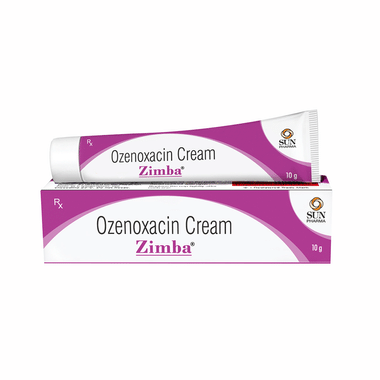
All Details About Zimba 1% Cream
Find out detailed description, uses, directions of use, side effects, warnings and precautions, frequently asked questions about Zimba 1% Cream
Description:
Zimba 1% Cream is an antimicrobial medicine. It is used for the topical treatment of impetigo. It can be used in adults as well as pediatric patients 2 months of age and older. It inhibits the infection-causing bacteria and prevents their growth and further spread of the infection.Zimba 1% Cream is only for external use. Employ it in the dose and duration as prescribed by the doctor. Read the package insert thoroughly before using the medicine. Apply a thin layer of the medicine topically to the affected area twice daily or as directed by your doctor. You can consider covering the treated area with a sterile bandage or gauze dressing. Make sure to wash your hands before and after applying the medicine. If you see no changes after 5 days, let your doctor know.
Zimba 1% Cream is generally safe with little or no side effects. However, it may cause erythema (redness and often small, red, pus-filled bumps on the face) and dermatitis (scaly patches and red skin, mainly on the scalp, specifically called seborrheic dermatitis) in some people. If you experience any such side effects, let your doctor know.
Avoid contact of the medicine with your mouth, eyes, or inside of the nose. In case of accidental contact, rinse it off with plenty of water. Do not use the medicine if you have any history of allergic reaction to any of the components present in this medicine.
Uses:
- Bacterial infections
- Treatment of Impetigo
Directions For Use:
This medicine is for external use only. Employ it in the dose and duration as advised by your doctor. Check the label for directions before use. Immaculate and dry the affected area and apply the cream. Wash your hands after applying, unless hands are the affected area.Side Effects:
Most side effects do not require any medical attention and disappear as your body adjusts to the medicine. Consult your doctor if they persist or if you’re worried about themOrdinary side effects of Zimba
- Erythema (skin redness)
- Dermatitis
- Seborrheic dermatitis
- Rosacea
Warning & Precautions:
FAQs:
What is Zimba 1% Cream used for?
What if I accidentally get Zimba 1% Cream in my eyes or mouth?
Is it safe to use Zimba 1% Cream during vaccination or other treatments?
What should I do if the infection does not improve after Zimba 1% Cream treatment?
Can Zimba 1% Cream cause antibiotic resistance?
Can I use Zimba 1% Cream on my face or sensitive skin?
Written by:
Dr. T. Sharmila Krishna
M.B.B.S., MD (Biochemistry)
Reviewed by:
Dr. Sureshbabu Yadav
M.B.B.S., DIP.DIAB, F.R.S.H
Disclaimer:
Getomeds primary intention is to ensure that its consumers get information that is reviewed by experts, accurate, and trustworthy. The information and contents of this website are for informational purposes only. They are not intended to be a substitute for professional medical advice, diagnosis, or treatment. Please seek the advice of your doctor and discuss all of your concerns about any disease or medication. Do not disregard or postpone seeking professional medical advice because of something you read on Getomeds. Our mission is to support, not replace, the doctor-patient relationship.