
-
Corazel 8mg Tablet (Rs.83.44)
Composition: Azelnidipine (8mg)
-
Ziantan 8mg Tablet (Rs.92.81)
Composition: Azelnidipine (8mg)
-
Azokem 8mg Tablet (Rs.196.88)
Composition: Azelnidipine (8mg)
-
Azedax 8mg Tablet (Rs.87.19)
Composition: Azelnidipine (8mg)
-
Zeblong 8mg Tablet (Rs.117.75)
Composition: Azelnidipine (8mg)
-
Emdip 8mg Tablet (Rs.92.81)
Composition: Azelnidipine (8mg)
-
Azilpine 8 Tablet (Rs.121.88)
Composition: Azelnidipine (8mg)
-
Azilta 8 Tablet (Rs.92.81)
Composition: Azelnidipine (8mg)
-
Azeliren 8mg Tablet (Rs.120.93)
Composition: Azelnidipine (8mg)
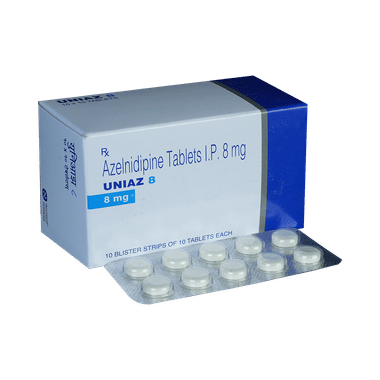
All Details About Uniaz 8mg Tablet
Find out detailed description, uses, directions of use, side effects, warnings and precautions, frequently asked questions about Uniaz 8mg Tablet
Description:
Uniaz 8mg Tablet is a calcium channel blocker used to treat high blood pressure. It relaxes and widens blood vessels, allowing blood to flow more easily and reducing strain on the heart. Controlling blood pressure helps protect the heart, brain, and kidneys from damage caused by long-term hypertension.Uniaz 8mg Tablet may be prescribed alone or along with other medicines. You can take it at any time of the day, with or without food, but it is best to take it at the same time each day. Continue taking it for as long as your doctor advises. Do not stop taking it suddenly, even if you feel well, as high blood pressure often has no symptoms, and stopping treatment may make your condition worse.
Regular exercise, maintaining a healthy weight, and eating a balanced diet can further help manage your blood pressure. Follow your doctor’s advice carefully while taking this medicine. Studies suggest that Uniaz 8mg Tablet may also provide protective benefits for the heart.
The most common side effects include itching, drowsiness, constipation, abdominal pains, diarrhea, and frequent urination. Consult your doctor if any of these bother you or worsen. They may be able to suggest ways to reduce the side effects.
Earlier taking it, let your doctor know if you have any liver, heart, or kidney problems. Pregnant or breastfeeding women should also consult their doctor for advice before taking this medicine. You also need to tell your doctor what other medicines you are taking, especially those used to treat high blood pressure or heart conditions. You should have your blood pressure checked regularly to make sure that this medicine is working properly.
Directions For Use:
Take this medicine in the dose and duration as advised by your doctor. Swallow it as a whole. Do not chew, crush or break it. Uniaz 8mg Tablet may be taken with or without food.Side Effects:
Most side effects do not require any medical attention and disappear as your body adjusts to the medicine. Consult your doctor if they persist or if you’re worried about themOrdinary side effects of Uniaz
- Swelling
- Numbness
- Drowsiness
- Abdominal pain
- Diarrhea
- Frequent urge to urinate
- Decreased potassium level in blood
- Itching
Warning & Precautions:
FAQs:
What is the use of Uniaz 8mg Tablet?
Is Uniaz 8mg Tablet bad for the kidneys?
Should I take Uniaz 8mg Tablet in the morning or at night?
How long do I need to take Uniaz 8mg Tablet?
Is Uniaz 8mg Tablet a beta-blocker?
What are the serious side effects of Uniaz 8mg Tablet?
What should I avoid while taking Uniaz 8mg Tablet?
I have developed ankle edema and swelling over my feet after using Uniaz 8mg Tablet. What should I do?
Written by:
Dr. T. Sharmila Krishna
M.B.B.S., MD (Biochemistry)
Reviewed by:
Dr. Sureshbabu Yadav
M.B.B.S., DIP.DIAB, F.R.S.H
Disclaimer:
Getomeds primary intention is to ensure that its consumers get information that is reviewed by experts, accurate, and trustworthy. The information and contents of this website are for informational purposes only. They are not intended to be a substitute for professional medical advice, diagnosis, or treatment. Please seek the advice of your doctor and discuss all of your concerns about any disease or medication. Do not disregard or postpone seeking professional medical advice because of something you read on Getomeds. Our mission is to support, not replace, the doctor-patient relationship.