
 Not Available
-
Altyna Tablet (Rs.54.38)
Composition: Sodium Chloride (1000mg)
-
More Na Tablet (Rs.37.5)
Composition: Sodium Chloride (1000mg)
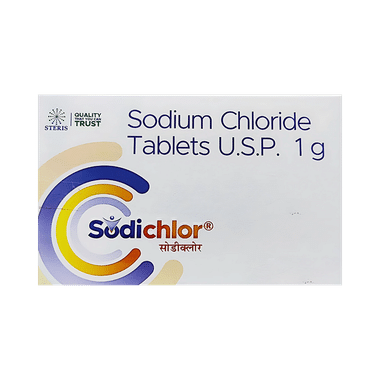
All Details About Sodichlor Tablet
Find out detailed description, uses, directions of use, side effects, warnings and precautions, frequently asked questions about Sodichlor Tablet
Description:
Sodichlor Tablet is a medicine used for short-term fluid replacement. It helps treat the loss of salt and electrolyte levels in the body caused by dehydration or trauma.Take Sodichlor Tablet in a dose and duration as advised by the doctor. You should not stop it suddenly and should complete the full course of treatment even if you feel better. Sodichlor Tablet should be taken as a whole or can be dissolved in water before consumption, depending on the condition required to be treated.
Sodichlor Tablet has minimal side effects. You may experience rashes, nausea, vomiting, and stomach pain on taking the medicine. Since these side effects are temporary, let your doctor know if they bother you.
Earlier taking Sodichlor Tablet, inform your doctor if you are on a sodium-restricted diet due to any ailment. Tell your doctor if you are pregnant, planning a pregnancy, or breastfeeding.
Uses:
- Short term fluid replacement after trauma
Directions For Use:
Take this medicine in the dose and duration as advised by your doctor. Swallow it as a whole. Do not chew, crush or break it. Sodichlor Tablet may be taken with or without food, but it is better to take it at a fixed time.Side Effects:
Most side effects do not require any medical attention and disappear as your body adjusts to the medicine. Consult your doctor if they persist or if you’re worried about themOrdinary side effects of Sodichlor
- Rash
- Nausea
- Vomiting
- Stomach pain
- Peripheral edema
Warning & Precautions:
FAQs:
How should I take Sodichlor Tablet?
When will I feel better after taking Sodichlor Tablet?
Will Sodichlor Tablet help with muscle cramps?
Can I take Sodichlor Tablet if I have high blood pressure?
Who should avoid taking Sodichlor Tablet?
Written by:
Dr. T. Sharmila Krishna
M.B.B.S., MD (Biochemistry)
Reviewed by:
Dr. Sureshbabu Yadav
M.B.B.S., DIP.DIAB, F.R.S.H
Disclaimer:
Getomeds primary intention is to ensure that its consumers get information that is reviewed by experts, accurate, and trustworthy. The information and contents of this website are for informational purposes only. They are not intended to be a substitute for professional medical advice, diagnosis, or treatment. Please seek the advice of your doctor and discuss all of your concerns about any disease or medication. Do not disregard or postpone seeking professional medical advice because of something you read on Getomeds. Our mission is to support, not replace, the doctor-patient relationship.