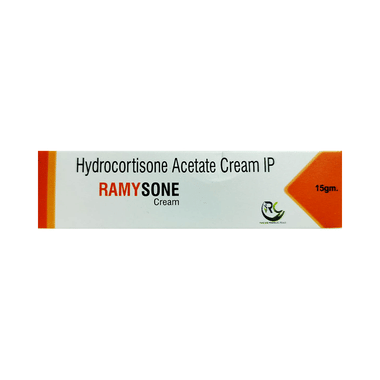

 Not Available
-
Navicort 1.0% Cream (Rs.89)
Composition: Hydrocortisone (1.0% w/w)
All Details About Ramysone Cream
Find out detailed description, uses, directions of use, side effects, warnings and precautions, frequently asked questions about Ramysone Cream
Description:
Ramysone Cream is a topical steroid used for the treatment of mild to moderate inflammatory skin disorders. It prevents the release of substances that cause inflammation and provides relief from swelling, redness, and itching in the affected area.Ramysone Cream is meant only for external use and should be used as advised by your doctor. You should normally clean and dry the affected area before applying a thin layer of the medicine evenly on the affected skin. You should not apply it to open wounds or damaged skin. Employ it regularly to get the maximum benefit from it.
It is usually well tolerated with little or no side effects. However, it may cause application site reactions such as burning, irritation, itching, and redness in some people. These side effects are temporary and usually go away with time. However, if they persist or worsen, let your doctor know.
Pregnant and breastfeeding mothers need to consult their doctors before using this medicine. Avoid any contact with your eyes, nose, or mouth. Rinse it off with plenty of water in case of accidental contact. Avoid covering the treated area with airtight dressings such as bandages unless directed by a doctor.
Ramysone Cream is contraindicated in patients with a history of hypersensitivity to the medicine or any of its constituent ingredients. Tolerants with tuberculosis or fungal infections and/or herpes infections of the eyes, lips, or genitals should also avoid the use of Ramysone Cream or consult a doctor.
Ramysone Cream should not be used under waterproof dressings unless advised to do so by a physician. Ramysone Cream should not be used to treat acne. Ramysone Cream should not be used for external feminine itching if a vaginal discharge is present. It is not to be used for external anal itching if bleeding is present.
Uses:
- Treatment of Skin disorders
Directions For Use:
This medicine is for external use only. Employ it in the dose and duration as advised by your doctor. Check the label for directions before use. Immaculate and dry the affected area and apply the cream. Wash your hands after applying, unless hands are the affected area.Side Effects:
Most side effects do not require any medical attention and disappear as your body adjusts to the medicine. Consult your doctor if they persist or if you’re worried about themOrdinary side effects of Ramysone
- Application site reactions (burning, irritation, itching and redness)
- Dry skin
- Hair follicle inflammation
- Hypertrichosis (excessive hair growth)
- Acne-like rash
- Hypopigmentation
- Perioral dermatitis
- Allergic contact dermatitis
- Skin maceration
- Secondary infections
- Skin atrophy
- Stretch marks
- Miliaria (sweat rash)
Warning & Precautions:
FAQs:
Can Ramysone Cream be used on the face?
Can we use Ramysone Cream in infections?
How to use Ramysone Cream?
Can I stop taking Ramysone Cream when my symptoms are relieved?
What are the precautions that are needed to be taken while using Ramysone Cream?
Who should not use Ramysone Cream?
What should I do if I forget to use Ramysone Cream?
Written by:
Dr. T. Sharmila Krishna
M.B.B.S., MD (Biochemistry)
Reviewed by:
Dr. Sureshbabu Yadav
M.B.B.S., DIP.DIAB, F.R.S.H
Disclaimer:
Getomeds primary intention is to ensure that its consumers get information that is reviewed by experts, accurate, and trustworthy. The information and contents of this website are for informational purposes only. They are not intended to be a substitute for professional medical advice, diagnosis, or treatment. Please seek the advice of your doctor and discuss all of your concerns about any disease or medication. Do not disregard or postpone seeking professional medical advice because of something you read on Getomeds. Our mission is to support, not replace, the doctor-patient relationship.