
 Limited Stock
-
Symez L 75mg/20mg Capsule (Rs.150)
Composition: Levosulpiride (75mg) + Rabeprazole (20mg)
-
Rabtrial LS 75mg/20mg Capsule (Rs.293.44)
Composition: Levosulpiride (75mg) + Rabeprazole (20mg)
-
Rabford-L Capsule SR (Rs.220.31)
Composition: Levosulpiride (75mg) + Rabeprazole (20mg)
-
Raboid-L Capsule SR (Rs.173.44)
Composition: Levosulpiride (75mg) + Rabeprazole (20mg)
-
Rabpra-LSR Capsule (Rs.168.75)
Composition: Levosulpiride (75mg) + Rabeprazole (20mg)
-
Rabene L 75mg/20mg Capsule SR (Rs.202.97)
Composition: Levosulpiride (75mg) + Rabeprazole (20mg)
-
Rabemphy LS 75mg/20mg Capsule (Rs.168.75)
Composition: Levosulpiride (75mg) + Rabeprazole (20mg)
-
Rabinal L 75mg/20mg Capsule (Rs.156.56)
Composition: Levosulpiride (75mg) + Rabeprazole (20mg)
-
Rabzokem L Capsule SR (Rs.222.19)
Composition: Levosulpiride (75mg) + Rabeprazole (20mg)
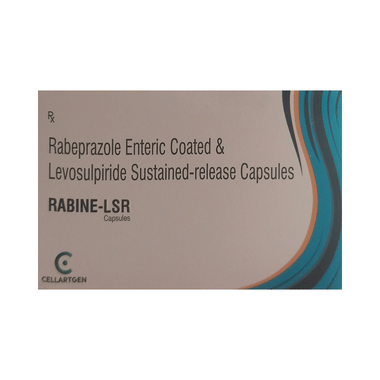
All Details About Rabine-LSR Capsule
Find out detailed description, uses, directions of use, side effects, warnings and precautions, frequently asked questions about Rabine-LSR Capsule
Description:
Rabine-LSR Capsule is a prescription medicine which is used in the treatment of gastroesophageal reflux disease (acid reflux), intestinal ulcers, and irritable bowel syndrome. It reduces excess acid production in the stomach and prevents the reflux of stomach acid into the food pipe.Rabine-LSR Capsule is taken with or without food in a dose and duration as advised by the doctor. The dose you are given will depend on your condition and how you respond to the medicine. You should keep taking this medicine for as long as your doctor recommends. If you stop treatment too early your symptoms may come back and your condition may worsen. Let your healthcare team know about all other medications you are taking as some may affect, or be affected by this medicine.
The most common side effects are nausea, stomach pain, diarrhea, flatulence, constipation, headache, weakness, and flu-like symptoms. Most of these are temporary and usually resolve with time. Contact your doctor straight away if you are at all concerned about any of these side effects. It may also cause dizziness and sleepiness, so do not drive or do anything that requires mental focus until you know how this medicine affects you. Avoid drinking alcohol while taking this medicine as it can worsen your sleepiness.
Lifestyle modifications like having fiber-rich diet, avoiding foods that trigger your symptoms, increasing fluid intake and regular exercise can help you to get better results. Earlier taking it, you should tell your doctor if you have any kidney or liver diseases. You should also tell your doctor if you are pregnant, planning pregnancy or breastfeeding.
Uses:
- Treatment of Intestinal ulcers
- Treatment of Irritable bowel syndrome
- Treatment of Gastroesophageal reflux disease (Acid reflux)
Directions For Use:
Take this medicine in the dose and duration as advised by your doctor. Swallow it as a whole. Do not chew, crush or break it. Rabine-LSR Capsule is to be taken on an empty stomach.Side Effects:
Most side effects do not require any medical attention and disappear as your body adjusts to the medicine. Consult your doctor if they persist or if you’re worried about themOrdinary side effects of Rabine-L
- Weakness
- Flatulence
- Vomiting
- Nausea
- Abdominal pain
- Diarrhea
- Headache
- Dizziness
- Cough
- Breast enlargement in male
- Drowsiness
- Reviseed libido
- Totalness of menstrual periods
- Atypical production of breast milk in women and men
- Posterior pain
Warning & Precautions:
FAQs:
Which is the best time to take Rabine-LSR Capsule?
What are the contraindications associated with the use of Rabine-LSR Capsule?
Can the use of Rabine-LSR Capsule cause dizziness?
Does the use of Rabine-LSR Capsule lead to increased risk of fractures?
Can I drive while taking Rabine-LSR Capsule?
What are the instructions for the storage and disposal of Rabine-LSR Capsule?
Written by:
Dr. Lokanish
M.B.B.S.
Reviewed by:
Dr. Sureshbabu Yadav
M.B.B.S., DIP.DIAB, F.R.S.H
Disclaimer:
Getomeds primary intention is to ensure that its consumers get information that is reviewed by experts, accurate, and trustworthy. The information and contents of this website are for informational purposes only. They are not intended to be a substitute for professional medical advice, diagnosis, or treatment. Please seek the advice of your doctor and discuss all of your concerns about any disease or medication. Do not disregard or postpone seeking professional medical advice because of something you read on Getomeds. Our mission is to support, not replace, the doctor-patient relationship.