
 Limited Stock
-
Synflorix Vaccine (Rs.2599)
Composition: Pneumococcal Polysaccharide Conjugate Vaccine (NA)
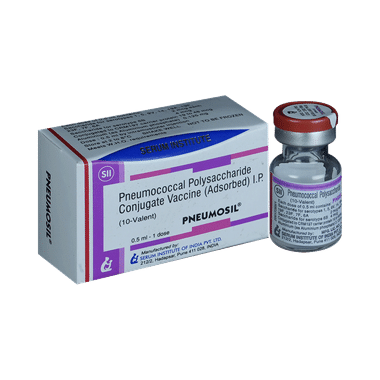
All Details About Pneumosil Vaccine
Find out detailed description, uses, directions of use, side effects, warnings and precautions, frequently asked questions about Pneumosil Vaccine
Description:
Pneumosil Vaccine helps protect against infections caused by the bacteria Streptococcus pneumoniae. It helps prevent serious conditions such as pneumonia, meningitis, bloodstream infections, and certain ear infections. It works by training the immune system to recognize and fight these bacteria effectively.Pneumosil Vaccine is given as an intramuscular injection by a doctor or a nurse. It is important to follow the recommended vaccination schedule to ensure full protection. Attending all scheduled doses provides the best long-term protection against pneumococcal disease.
The most common effects of Pneumosil Vaccine include irritability, sleepiness, reduced appetite, fever, and redness or pain at the injection site. It may also cause muscle pain, fatigue, headache, and joint discomfort. These effects are usually mild, short-lasting, and resolve on their own. If symptoms persist or if there are signs of a severe allergic reaction, medical attention should be sought immediately.
Pneumosil Vaccine should not be given to anyone who has had a severe allergic reaction to a previous dose of a pneumococcal vaccine or to any component of the vaccine. Employ with caution in individuals with weakened immune systems, as they may have a reduced immune response. In infants born prematurely, there is a potential risk of temporary breathing pauses after vaccination, so the timing of vaccination should be carefully considered.
Uses:
- Prevention of pneumonia, meningitis, blood infection & ear infection
Directions For Use:
Your doctor or nurse will give you this medicine. Compassionately do not self administer.Side Effects:
Most side effects do not require any medical attention and disappear as your body adjusts to the medicine. Consult your doctor if they persist or if you’re worried about themOrdinary side effects of Pneumosil
- Loss of appetite
- Irritability
- Drowsiness
- Fever
- Injection site reactions (pain, swelling, redness)
- Chubbyigue
- Muscle pain
- Joint pain
- Headache
Warning & Precautions:
Pneumosil Vaccine is not intended for use in adults.
Pneumosil Vaccine is not intended for use in adults.
FAQs:
What does Pneumosil Vaccine protect against?
At what age can this vaccine be given?
How is Pneumosil Vaccine given?
Can Pneumosil Vaccine be given if my child was born prematurely?
Who should not receive Pneumosil Vaccine?
Can I get this vaccine if I have a weak immune system?
Written by:
Dr. T. Sharmila Krishna
M.B.B.S., MD (Biochemistry)
Reviewed by:
Dr. Sureshbabu Yadav
M.B.B.S., DIP.DIAB, F.R.S.H
Disclaimer:
Getomeds primary intention is to ensure that its consumers get information that is reviewed by experts, accurate, and trustworthy. The information and contents of this website are for informational purposes only. They are not intended to be a substitute for professional medical advice, diagnosis, or treatment. Please seek the advice of your doctor and discuss all of your concerns about any disease or medication. Do not disregard or postpone seeking professional medical advice because of something you read on Getomeds. Our mission is to support, not replace, the doctor-patient relationship.