
 Limited Stock
-
Tramox CV Forte Dry Syrup (Rs.126.56)
Composition: Amoxycillin (400mg/5ml) + Clavulanic Acid (57mg/5ml)
-
Stabimox CV DS Dy Syrup (Rs.134.06)
Composition: Amoxycillin (400mg/5ml) + Clavulanic Acid (57mg/5ml)
-
Pamclav DS Dry Syrup (Rs.130)
Composition: Amoxycillin (400mg/5ml) + Clavulanic Acid (57mg/5ml)
-
Moxiright 457 Dry Syrup (Rs.139.69)
Composition: Amoxycillin (400mg/5ml) + Clavulanic Acid (57mg/5ml)
-
Omexin DS Dry Syrup (Rs.180)
Composition: Amoxycillin (400mg/5ml) + Clavulanic Acid (57mg/5ml)
-
Merito Duo Dry Syrup (Rs.117)
Composition: Amoxycillin (400mg/5ml) + Clavulanic Acid (57mg/5ml)
-
Naccin DS Dry Syrup (Rs.117)
Composition: Amoxycillin (400mg/5ml) + Clavulanic Acid (57mg/5ml)
-
Logistic CV-DS Oral Suspension (Rs.99)
Composition: Amoxycillin (400mg/5ml) + Clavulanic Acid (57mg/5ml)
-
Delta 457 Dry Syrup Orange (Rs.131.25)
Composition: Amoxycillin (400mg/5ml) + Clavulanic Acid (57mg/5ml)
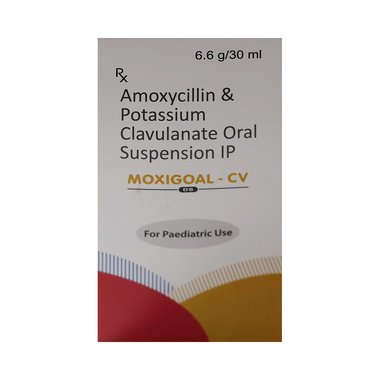
All Details About Moxigoal-CV DS Oral Suspension
Find out detailed description, uses, directions of use, side effects, warnings and precautions, frequently asked questions about Moxigoal-CV DS Oral Suspension
Description:
Moxigoal-CV DS Oral Suspension is an antibiotic medicine that helps treat bacterial infections of the ear, nose, throat, chest, lungs, teeth, skin, and urinary tract. It is capable of killing bacteria that have become resistant to other therapies and thus also helps treat tuberculosis that is resistant to other treatments.You can give Moxigoal-CV DS Oral Suspension to your child with or without food. It is better to give it with food as that helps increase absorption and decrease the risk of stomach upset. The doctor may prescribe giving it two to three times a day. Medicine dose depends on the severity of the infection, its type, and your child’s body weight and age. So, stick to the dose, time, and way prescribed. If your child vomits the medicine within 30 minutes of intake, let the child calm down and repeat the dose. Do not double dose if it's the time for the next dose.
Moxigoal-CV DS Oral Suspension may cause vomiting, diarrhea, nausea, abdominal pain, and allergy. These side effects should diminish on their own. But, in case they persist or start bothering your child, you must not delay speaking to your child’s doctor.
Share your child’s entire medical history with the doctor, including any previous episode of allergy, heart problem, blood disorder, birth defects, airway obstruction, lung anomaly, gastrointestinal problem, skin disorder, liver impairment, and kidney malfunction. This information will assist the doctor in making dose alterations and for planning your child’s overall treatment.
Directions For Use:
Take this medicine in the dose and duration as advised by your doctor. Check the label for directions before use. Measure it with a measuring cup and take it by mouth. Shake well before use. Moxigoal-CV DS Oral Suspension should be taken with or after food.Side Effects:
Most side effects do not require any medical attention and disappear as your body adjusts to the medicine. Consult your doctor if they persist or if you’re worried about themOrdinary side effects of Moxigoal-CV
- Mucocutaneous candidiasis
- Abdominal pain
- Allergy
- Vomiting
- Nausea
- Diarrhea
Warning & Precautions:
Consult with your child’s doctor before giving Moxigoal-CV DS Oral Suspension to your child in case of a severe form of liver disease.
FAQs:
Can other medicines be given at the same time as Moxigoal-CV DS Oral Suspension?
Can I get my child vaccinated while on treatment with Moxigoal-CV DS Oral Suspension?
Which lab tests may my child undergo while taking Moxigoal-CV DS Oral Suspension on a long-term basis?
Can I give a higher than the recommended dose of Moxigoal-CV DS Oral Suspension to my child?
Can I stop giving Moxigoal-CV DS Oral Suspension to my child when the symptoms are relieved?
Can the use of Moxigoal-CV DS Oral Suspension cause diarrhea?
Do all viral common colds result in secondary bacterial infection?
The mucus coming out of my child’s nose is yellow-green. Is it a sign of a bacterial infection?
Is there any sign which shows that my child needs immediate medical attention?
Written by:
Dr. Lokanish
M.B.B.S.
Reviewed by:
Dr. Sureshbabu Yadav
M.B.B.S., DIP.DIAB, F.R.S.H
Disclaimer:
Getomeds primary intention is to ensure that its consumers get information that is reviewed by experts, accurate, and trustworthy. The information and contents of this website are for informational purposes only. They are not intended to be a substitute for professional medical advice, diagnosis, or treatment. Please seek the advice of your doctor and discuss all of your concerns about any disease or medication. Do not disregard or postpone seeking professional medical advice because of something you read on Getomeds. Our mission is to support, not replace, the doctor-patient relationship.