 No Longer Valid
-
Fikspas-P 10mg/40mg Drop (Rs.56.25)
Composition: Dicyclomine (10mg) + Dimethicone (40mg)
-
Spasnol Oral Drops (Rs.92.81)
Composition: Dicyclomine (10mg) + Dimethicone (40mg)
-
Spamin Syrup (Rs.159.38)
Composition: Dicyclomine (10mg) + Dimethicone (40mg)
-
Dromod Dry Syrup (Rs.32.81)
Composition: Dicyclomine (10mg) + Dimethicone (40mg)
-
Dimcit Oral Drops (Rs.44.06)
Composition: Dicyclomine (10mg) + Dimethicone (40mg)
-
Coliac Oral Drops (Rs.79.69)
Composition: Dicyclomine (10mg) + Dimethicone (40mg)
-
Himospasmine Oral Drops (Rs.19.78)
Composition: Dicyclomine (10mg) + Dimethicone (40mg)
-
Colipride Oral Drops (Rs.36.56)
Composition: Dicyclomine (10mg) + Dimethicone (40mg)
-
Curebel 10mg/40mg Tablet (Rs.105)
Composition: Dicyclomine (10mg) + Dimethicone (40mg)
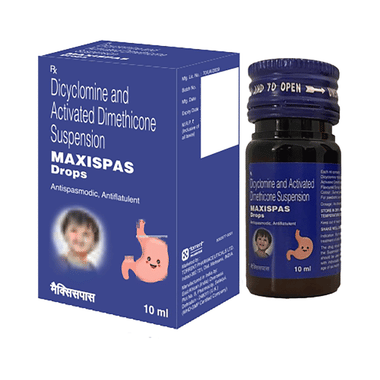
All Details About Maxispas Drop
Find out detailed description, uses, directions of use, side effects, warnings and precautions, frequently asked questions about Maxispas Drop
Description:
Maxispas Drop helps treat stomach pain, bloating, and abdominal cramps caused due to acidity, gas, infections, or diseases of the gastrointestinal tract in children. It works by relaxing the muscles of the gut and absorbing extra gas. Maxispas Drop also helps control the symptoms of irritable bowel syndrome.Donate the prescribed dose of Maxispas Drop to your child orally before a meal or as suggested by the doctor. Your child’s doctor may prescribe this medicine for a few days to many days. But, do not continue it for more than 2 weeks without consulting the doctor as excessive and long-term use may have adverse effects on your child. Increaseitionally, do not abruptly stop the medicine by yourself as it may bring back the symptoms or worsen your child’s condition.
Some of the common yet temporary side effects of this medicine include nausea, vomiting, constipation, burping, vision problem, loss of appetite, and drowsiness. If these occur, they will subside once your child’s body adapts to the medicine. In case these side effects do not improve or become bothersome for your child, do reach out to the doctor on a priority basis.
You must let your child’s doctor know about all the medicines your child is being given. Also, inform the doctor of any previous history of allergy, intolerance to any food products, abdominal obstruction, liver impairment, kidney malfunction, or any birth defects. This information is very important for dose alterations and for planning your child’s overall treatment.
Directions For Use:
Take this medicine in the dose and duration as advised by your doctor. Check the label for directions before use. Measure it with a measuring cup and take it by mouth. Shake well before use. Maxispas Drop may be taken with or without food.Side Effects:
Most side effects do not require any medical attention and disappear as your body adjusts to the medicine. Consult your doctor if they persist or if you’re worried about themOrdinary side effects of Maxispas
- Nausea
- Vomiting
- Blurred vision
- Drowsiness
- Tenseness
- Constipation
- Diarrhea
- Burping
- Loss of appetite
Warning & Precautions:
However, Maxispas Drop is relatively safe to use in mild to moderate kidney disease. Discuss with your child’s doctor thoroughly before giving this medicine to your child.
However, Maxispas Drop is relatively safe to use in mild to moderate liver disease. Discuss with your child’s doctor thoroughly before giving this medicine to your child.
FAQs:
My child is having abdominal pain associated with nausea, vomiting, and sensitivity to light. Is Maxispas Drop safe in such a case?
What all tests do my child need to undergo if he has abdominal pain?
In which all diseases should Maxispas Drop be avoided?
Can other medicines be given at the same time as Maxispas Drop?
How should Maxispas Drop be stored?
Written by:
Dr. T. Sharmila Krishna
M.B.B.S., MD (Biochemistry)
Reviewed by:
Dr. Sureshbabu Yadav
M.B.B.S., DIP.DIAB, F.R.S.H
Disclaimer:
Getomeds primary intention is to ensure that its consumers get information that is reviewed by experts, accurate, and trustworthy. The information and contents of this website are for informational purposes only. They are not intended to be a substitute for professional medical advice, diagnosis, or treatment. Please seek the advice of your doctor and discuss all of your concerns about any disease or medication. Do not disregard or postpone seeking professional medical advice because of something you read on Getomeds. Our mission is to support, not replace, the doctor-patient relationship.