
-
Pegcyte Injection (Rs.8437.5)
Composition: Pegfilgrastim (6mg)
-
Pegg Trust 6mg Injection (Rs.4992.1)
Composition: Pegfilgrastim (6mg)
-
Pegneon 6mg Injection (Rs.600)
Composition: Pegfilgrastim (6mg)
-
Gcpeg Injection (Rs.9950)
Composition: Pegfilgrastim (6mg)
-
PegGRAfeel Injection (Rs.3414.38)
Composition: Pegfilgrastim (6mg)
-
Peg Ancount 6mg Injection (Rs.4687.5)
Composition: Pegfilgrastim (6mg)
-
Pegf 6mg Injection (Rs.7500)
Composition: Pegfilgrastim (6mg)
-
Adfill 6mg Injection (Rs.7574)
Composition: Pegfilgrastim (6mg)
-
Peglast 6mg Injection (Rs.6000)
Composition: Pegfilgrastim (6mg)
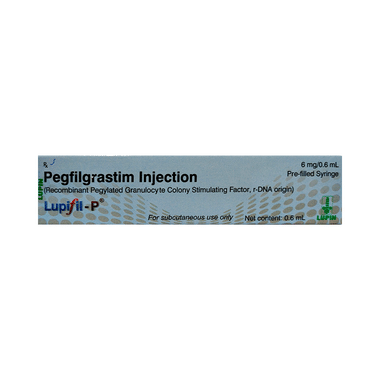
All Details About Lupifil P Injection
Find out detailed description, uses, directions of use, side effects, warnings and precautions, frequently asked questions about Lupifil P Injection
Description:
Lupifil P Injection is used to prevent infections after chemotherapy. It is a growth factor that stimulates bone marrow to produce white blood cells. These cells protect the body against infections.Lupifil P Injection is given as an injection by a qualified medical professional. You should continue to take as long as your doctor advises for it. The duration of treatment varies according to your need and response to treatment. You might be asked for regular tests done to check the number of blood cells in your blood and your bone density level while you are taking this medicine.
The most common side effects of this medicine include bone pain, joint pain, headache, nausea, and muscle pain. Other than this, pain or redness at the site of injection is common. But, inform your doctor if you notice a lump, swelling, or bruising that does not go away. It might not prevent you from all kinds of infection, hence inform your doctor if you notice fever, chills, shortness of breath, sore throat, and swelling around the face or neck.
Many other medicines can affect, or be affected by, this medicine so let your healthcare team know all medications you are using. This medicine is not recommended during pregnancy or while breastfeeding. The use of effective contraception by both males and females during treatment is important to avoid pregnancy. You must avoid driving or attention-seeking activity if you experience dizziness after taking this medicine.
Uses:
- Prevention of Infections after chemotherapy
Directions For Use:
Your doctor or nurse will give you this medicine. Compassionately do not self administer.Side Effects:
Most side effects do not require any medical attention and disappear as your body adjusts to the medicine. Consult your doctor if they persist or if you’re worried about themOrdinary side effects of Lupifil P
- Bone pain
- Joint pain
- Headache
- Nausea
- Low blood platelets
- Muscle pain
- Posterior pain
- Pain in extremities
- Injection site pain
Warning & Precautions:
FAQs:
What is Lupifil P Injection? How is it given?
How does pegfilgrastim work?
Written by:
Dr. T. Sharmila Krishna
M.B.B.S., MD (Biochemistry)
Reviewed by:
Dr. Sureshbabu Yadav
M.B.B.S., DIP.DIAB, F.R.S.H
Disclaimer:
Getomeds primary intention is to ensure that its consumers get information that is reviewed by experts, accurate, and trustworthy. The information and contents of this website are for informational purposes only. They are not intended to be a substitute for professional medical advice, diagnosis, or treatment. Please seek the advice of your doctor and discuss all of your concerns about any disease or medication. Do not disregard or postpone seeking professional medical advice because of something you read on Getomeds. Our mission is to support, not replace, the doctor-patient relationship.