
 Limited Stock
-
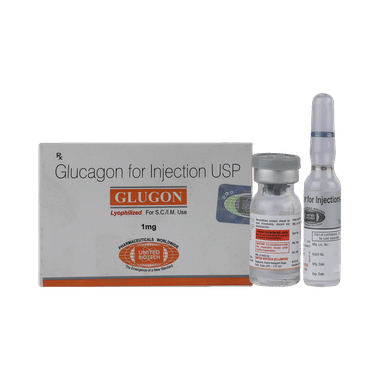
Glucagen 1mg Injection (Rs.990)
Composition: Glucagon (1mg)
All Details About Glugon 1mg Injection
Find out detailed description, uses, directions of use, side effects, warnings and precautions, frequently asked questions about Glugon 1mg Injection
Description:
Glugon Injection is used for emergency treatment of people with diabetes who have become unconscious because of very low blood sugar (severe hypoglycemia). It is used when such people are not able to take sugar by mouth. It may also be used in examinations of the gastrointestinal tract in adults.Glugon Injection may be given by a healthcare professional or by the patient’s caregiver if they have been trained to use it. You and your family members should learn to recognize the symptoms of severe hypoglycemia (such as irritability, sweating, fast heart rate, feeling anxious or shaky etc) and how to administer this medicine. Do not use Glugon Injection if it is discolored or if it contains particles.
Glugon Injection raises the blood sugar levels. Once the person gains consciousness and is able to eat, he or she must be given a high sugar snack like sweets, biscuits, or fruit juice. This will help prevent your blood sugar levels from falling again.
It is important to get emergency medical assistance after using this medicine. Your doctor will monitor your blood sugar levels and keep you under observation for some time. A complete medical evaluation is advised for all such people to find out the cause of severe hypoglycemia (low blood sugar levels) and to prevent it from happening again.
The most common side effect of this medicine is nausea. Please consult your doctor if it does not resolve or persists for a longer duration. Glugon Injection may not work properly if you have been fasting for a long time or if your low blood sugar levels have been caused by drinking too much alcohol.
Uses:
Directions For Use:
Your doctor or nurse will give you this medicine. Compassionately do not self administer.Side Effects:
Most side effects do not require any medical attention and disappear as your body adjusts to the medicine. Consult your doctor if they persist or if you’re worried about themOrdinary side effects of Glugon
- Nausea
Warning & Precautions:
FAQs:
What is Glugon Injection used for?
How quickly does Glugon Injection usually work, and what should happen after it is given?
Who must not use Glugon Injection?
Can Glugon Injection fail to work in some situations?
What are the common reactions I should expect after Glugon Injection is given?
Written by:
Dr. Lokanish
M.B.B.S.
Reviewed by:
Dr. Sureshbabu Yadav
M.B.B.S., DIP.DIAB, F.R.S.H
Disclaimer:
Getomeds primary intention is to ensure that its consumers get information that is reviewed by experts, accurate, and trustworthy. The information and contents of this website are for informational purposes only. They are not intended to be a substitute for professional medical advice, diagnosis, or treatment. Please seek the advice of your doctor and discuss all of your concerns about any disease or medication. Do not disregard or postpone seeking professional medical advice because of something you read on Getomeds. Our mission is to support, not replace, the doctor-patient relationship.