-
Glysul 40mg Tablet (Rs.49.45)
Composition: Gliclazide (40mg)
-
Glyred 40mg Tablet (Rs.14.06)
Composition: Gliclazide (40mg)
-
Gliclader 40mg Tablet (Rs.113.44)
Composition: Gliclazide (40mg)
-
Glicla DM 40mg Tablet (Rs.22.78)
Composition: Gliclazide (40mg)
-
Glygard 40mg Tablet (Rs.29.13)
Composition: Gliclazide (40mg)
-
Glico 40mg Tablet (Rs.17.81)
Composition: Gliclazide (40mg)
-
Glykind 40mg Tablet (Rs.8.56)
Composition: Gliclazide (40mg)
-
Avazide 40mg Tablet (Rs.52.5)
Composition: Gliclazide (40mg)
-
Euroglic 40mg Tablet (Rs.23.44)
Composition: Gliclazide (40mg)
-
Mclazide 40mg Tablet (Rs.75)
Composition: Gliclazide (40mg)
All Details About Glix 40 Tablet
Find out detailed description, uses, directions of use, side effects, warnings and precautions, frequently asked questions about Glix 40 Tablet
Description:
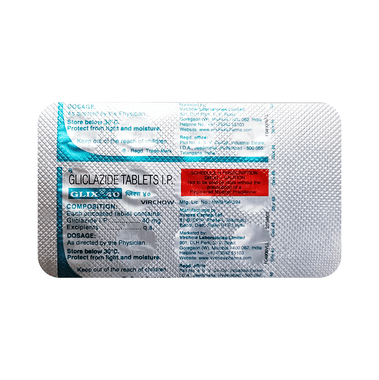
Glix 40 Tablet is a medicine used to treat type 2 diabetes mellitus in adults. It belongs to a group of medicines called sulfonylureas and helps control blood sugar levels in people with diabetes. This helps prevent serious complications of diabetes.Glix 40 Tablet may be prescribed alone or along with other medicines. It should be taken with food. Take it regularly at the same time each day to get the most benefit. Your doctor will decide what dose is best for you, which may change from time to time according to how it works. Continue using this medicine as prescribed, even if you feel fine or your blood sugar levels are stable. If you stop it without consulting your doctor, your blood sugar levels could rise and put you at risk of kidney damage, blindness, and nerve problems.
Retain in mind that this medicine is just one part of your treatment plan. It should be combined with a healthy diet, regular exercise, and weight management as recommended by your doctor. Your lifestyle plays a crucial role in managing diabetes.
The most common side effects of taking this medicine include diarrhea and headaches. It can also cause low blood glucose levels (hypoglycemia). Make sure you recognize the signs of having low blood glucose levels, such as sweating, dizziness, headache, and shaking. You must know how to deal with it.
To prevent hypoglycemic conditions, have regular meals and always carry a fast-acting source of glucose, such as sugary food or fruit juice, with you. Consuming alcohol can raise the risk of low blood sugar and should be avoided. Increaseitionally, some individuals may experience weight gain while taking this medicine. You should not take Glix 40 Tablet if you have type 1 diabetes mellitus, diabetic ketoacidosis (high levels of acid in your blood), or severe kidney or liver disease.
Earlier taking this medicine, tell your doctor if you have ever had heart disease, thyroid disease, or some hormonal conditions. It may not be suitable. Pregnant or breastfeeding women should also consult their doctor before taking it. Regularly monitor your blood sugar levels, and your doctor may recommend blood tests to check your blood cell counts and liver function.
Uses:
Directions For Use:
Take this medicine in the dose and duration as advised by your doctor. Swallow it as a whole. Do not chew, crush or break it. Glix 40 Tablet should be taken with or after food.Side Effects:
Most side effects do not require any medical attention and disappear as your body adjusts to the medicine. Consult your doctor if they persist or if you’re worried about themOrdinary side effects of Glix
- Hypoglycemia (low blood glucose level)
- Weight gain
- Flatulence
- Diarrhea
- Headache
- Nausea
- Dizziness
Warning & Precautions:
FAQs:
What is the best time to take Glix 40 Tablet?
Is Glix 40 Tablet the same as metformin?
Can you take metformin and Glix 40 Tablet at the same time?
Is Glix 40 Tablet bad for kidneys?
Written by:
Dr. Lokanish
M.B.B.S.
Reviewed by:
Dr. Sureshbabu Yadav
M.B.B.S., DIP.DIAB, F.R.S.H
Disclaimer:
Getomeds primary intention is to ensure that its consumers get information that is reviewed by experts, accurate, and trustworthy. The information and contents of this website are for informational purposes only. They are not intended to be a substitute for professional medical advice, diagnosis, or treatment. Please seek the advice of your doctor and discuss all of your concerns about any disease or medication. Do not disregard or postpone seeking professional medical advice because of something you read on Getomeds. Our mission is to support, not replace, the doctor-patient relationship.