
 Limited Stock
-
Flomir 0.4 Tablet MR (Rs.156.5)
Composition: Tamsulosin (0.4mg)
-
DyoTAM Capsule PR (Rs.150)
Composition: Tamsulosin (0.4mg)
-
Tamflo 0.4mg Capsule (Rs.149.72)
Composition: Tamsulosin (0.4mg)
-
Tamsil 0.4mg Capsule (Rs.145.31)
Composition: Tamsulosin (0.4mg)
-
Tamcort Tablet (Rs.86.25)
Composition: Tamsulosin (0.4mg)
-
T-Flow 0.4 Tablet MR (Rs.105)
Composition: Tamsulosin (0.4mg)
-
Tamlomax 0.4mg Tablet (Rs.148.13)
Composition: Tamsulosin (0.4mg)
-
Tamzloin 0.4mg Tablet (Rs.229.69)
Composition: Tamsulosin (0.4mg)
-
Tamsulin 0.4mg Capsule (Rs.75)
Composition: Tamsulosin (0.4mg)
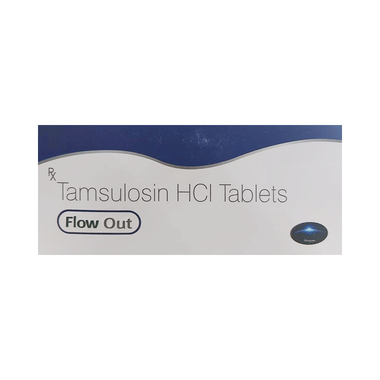
All Details About Flow Out Tablet
Find out detailed description, uses, directions of use, side effects, warnings and precautions, frequently asked questions about Flow Out Tablet
Description:
Flow Out Tablet is an alpha-adrenergic antagonist that is used in the treatment of benign prostatic hyperplasia. It helps to relieve symptoms like difficulty in passing urine. However, it does not decrease the size of the prostate.Take Flow Out Tablet in the dose and duration as prescribed by your doctor. It is best taken with food. Consider taking it after breakfast/first meal to promote uniform absorption. Do not stop taking the medicine without consulting the doctor, as it may worsen your symptoms.
Employ of this medicine can cause some common side effects such as dizziness, back pain, chest pain, ejaculation disorder, and retrograde ejaculation. If any of the side effects persist or bother you, you must consult the doctor without delay.
Simple lifestyle changes can help you manage your symptoms better. Try to urinate as soon as you feel the urge; however, never strain or push to empty your bladder. You should avoid drinking caffeinated or alcoholic drinks at night and for a few hours before going to bed or going out.
Earlier receiving the treatment, inform your doctor if you are on any medication for any other health condition. If you have to undergo eye surgery due to cataracts or glaucoma, inform your doctor about the usage of this medicine. Tolerants with liver disease must be cautious while receiving the prescription, and they must receive regular follow-ups as per the doctor’s advice.
Directions For Use:
Take this medicine in the dose and duration as advised by your doctor. Swallow it as a whole. Do not chew, crush or break it. Flow Out Tablet may be taken with or without food.Side Effects:
Most side effects do not require any medical attention and disappear as your body adjusts to the medicine. Consult your doctor if they persist or if you’re worried about themOrdinary side effects of Flow Out
- Dizziness
- Ejaculation disorder
Warning & Precautions:
Flow Out Tablet is not indicated for use in women.
Flow Out Tablet is not indicated for use in women.
FAQs:
What is the best time to take Flow Out Tablet?
Can the use of Flow Out Tablet increase blood sugar levels?
Does Flow Out Tablet cause weight gain?
When does Flow Out Tablet start to work?
Can I take Flow Out Tablet with vitamin D?
Why does Flow Out Tablet cause dizziness?
Why should I stop taking Flow Out Tablet before my cataract surgery?
Can Flow Out Tablet cause frequent urination?
What are the long-term effects of taking Flow Out Tablet?
Apart from taking medicines, what should I do to manage my prostate symptoms?
Written by:
Dr. T. Sharmila Krishna
M.B.B.S., MD (Biochemistry)
Reviewed by:
Dr. Sureshbabu Yadav
M.B.B.S., DIP.DIAB, F.R.S.H
Disclaimer:
Getomeds primary intention is to ensure that its consumers get information that is reviewed by experts, accurate, and trustworthy. The information and contents of this website are for informational purposes only. They are not intended to be a substitute for professional medical advice, diagnosis, or treatment. Please seek the advice of your doctor and discuss all of your concerns about any disease or medication. Do not disregard or postpone seeking professional medical advice because of something you read on Getomeds. Our mission is to support, not replace, the doctor-patient relationship.