
-
C Gatran 110mg Tablet (Rs.328.13)
Composition: Dabigatran Etexilate (110mg)
-
Dabitan 110mg Tablet (Rs.180.47)
Composition: Dabigatran Etexilate (110mg)
-
Dabixga 110mg Tablet (Rs.120)
Composition: Dabigatran Etexilate (110mg)
-
Debijohn 110mg Tablet (Rs.285.94)
Composition: Dabigatran Etexilate (110mg)
-
Dabipack 110mg Capsule (Rs.234.38)
Composition: Dabigatran Etexilate (110mg)
-
Dabmit 110mg Tablet (Rs.305.63)
Composition: Dabigatran Etexilate (110mg)
-
Dabisung 110mg Capsule (Rs.295.31)
Composition: Dabigatran Etexilate (110mg)
-
Dabirix 110mg Tablet (Rs.356.25)
Composition: Dabigatran Etexilate (110mg)
-
Dabifib 110 Capsule (Rs.267.08)
Composition: Dabigatran Etexilate (110mg)
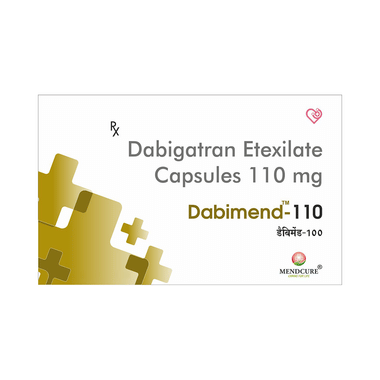
All Details About Dabimend 110 Capsule
Find out detailed description, uses, directions of use, side effects, warnings and precautions, frequently asked questions about Dabimend 110 Capsule
Description:
Dabimend 110 Capsule is a medicine that helps prevent and treat blood clots. It is used for the treatment and prevention of deep vein thrombosis (DVT), treatment and prevention of pulmonary embolism (PE), and to reduce the risk of stroke in people with certain heart rhythm problems such as atrial fibrillation.Dabimend 110 Capsule should be taken exactly as prescribed by your doctor, usually at regular intervals each day to maintain a steady blood-thinning effect. Taking the medicine with food may help reduce stomach discomfort. Do not skip doses, because missing doses or stopping treatment early can increase the risk of clot formation or stroke. Regular follow-up visits and kidney function checks may be required to ensure the medicine is working safely and effectively.
The most common side effects of Dabimend 110 Capsule are related to bleeding and stomach-related problems such as indigestion, abdominal discomfort, nausea, or stomach irritation. Mild bruising or minor bleeding, such as nosebleeds or bleeding gums, may occur because the medicine reduces the blood’s ability to clot. Contact your doctor if bleeding lasts longer than usual, becomes severe, or if you notice unusual symptoms such as black stools, blood in urine, or dizziness.
Dabimend 110 Capsule can increase the risk of serious or sometimes life-threatening bleeding, so extra caution is needed during treatment. Do not stop taking this medicine without medical advice, as sudden discontinuation can increase the risk of stroke or clot formation. Inform your doctor before any surgery, dental procedure, or spinal injection, since the medicine may need to be temporarily stopped to reduce bleeding risk.
This medicine should not be used in people with active bleeding, severe allergy to the medicine, or mechanical heart valves. Self-assured medicines, especially other blood thinners, pain relievers such as NSAIDs, or drugs that affect P-glycoprotein, may increase bleeding risk and should only be taken after medical consultation. Tolerants with kidney problems or older adults may require closer monitoring because the drug stays longer in the body. Pregnant and breastfeeding women should consult their doctors before taking this medicine to make sure it is safe for them.
Uses:
Directions For Use:
Take this medicine in the dose and duration as advised by your doctor. Dabimend 110 Capsule may be taken with or without food.Side Effects:
Most side effects do not require any medical attention and disappear as your body adjusts to the medicine. Consult your doctor if they persist or if you’re worried about themOrdinary side effects of Dabimend
- Nausea
- Anemia (low number of red blood cells)
- Gastrointestinal bleeding
- Diarrhea
- Abdominal pain
- Increased bleeding tendency
Warning & Precautions:
Employ of Dabimend 110 Capsule is not recommended in patients with severe kidney disease.
FAQs:
When should I take Dabimend 110 Capsule?
Can I drink alcohol with Dabimend 110 Capsule?
Can Dabimend 110 Capsule cause hair loss?
When will I feel better after taking Dabimend 110 Capsule?
Does Dabimend 110 Capsule affect the liver?
How should I store Dabimend 110 Capsule?
Can the use of Dabimend 110 Capsule increase the risk of bleeding?
Who should not take Dabimend 110 Capsule?
Written by:
Dr. Lokanish
M.B.B.S.
Reviewed by:
Dr. Sureshbabu Yadav
M.B.B.S., DIP.DIAB, F.R.S.H
Disclaimer:
Getomeds primary intention is to ensure that its consumers get information that is reviewed by experts, accurate, and trustworthy. The information and contents of this website are for informational purposes only. They are not intended to be a substitute for professional medical advice, diagnosis, or treatment. Please seek the advice of your doctor and discuss all of your concerns about any disease or medication. Do not disregard or postpone seeking professional medical advice because of something you read on Getomeds. Our mission is to support, not replace, the doctor-patient relationship.