
 Limited Stock
-
Chlor Succ 1gm Injection (Rs.45.7)
Composition: Chloramphenicol (1gm)
-
Chloraxin 1gm Injection (Rs.30.47)
Composition: Chloramphenicol (1gm)
-
LABCHLOR 1GM INJECTION (Rs.20.86)
Composition: Chloramphenicol (1gm)
-
Fencol 1gm Injection (Rs.5.95)
Composition: Chloramphenicol (1gm)
-
Kemicetine 1gm Injection (Rs.103.13)
Composition: Chloramphenicol (1gm)
-
Polymycetin Injection (Rs.75)
Composition: Chloramphenicol (1gm)
-
Jectophen 1gm Injection (Rs.28.13)
Composition: Chloramphenicol (1gm)
-
ParaXIN 1gm Injection (Rs.49.22)
Composition: Chloramphenicol (1gm)
-
Wocol 1gm Injection (Rs.32.81)
Composition: Chloramphenicol (1gm)
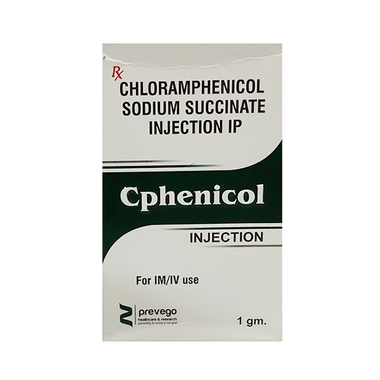
All Details About Cphenicol Injection
Find out detailed description, uses, directions of use, side effects, warnings and precautions, frequently asked questions about Cphenicol Injection
Description:
Cphenicol Injection is an antibiotic that fights bacteria. It is used to treat certain types of serious infections caused by bacteria when other antibiotics cannot be used. It works by killing the bacteria that cause these problems. However, it will not treat a viral infection.Cphenicol Injection is used to treat critically ill patients admitted to the hospital. It may be effective even when bacteria have developed resistance to other antibiotics. This medicine is given by drip or by direct injection into a vein, under the supervision of a doctor or nurse. The dose will depend on what type of infection you have, where it is in the body, and how serious it is. You should keep on taking the injection for as long as you are prescribed, even if your symptoms quickly improve. If you stop taking it too early the infection may return or worsen.
Some people may develop side effects like nausea, vomiting, diarrhea, taste change, or local redness and swelling at the site of injection. These side effects are usually temporary and go away during treatment as your body adjusts to the medicine. Consult your doctor if these side effects bother you or do not go away.
Earlier starting treatment with this medicine, you should tell your doctor if you have liver or kidney problems or if you are allergic to any antibiotic. While using it, your doctor may advise some blood tests to monitor your blood cell counts. Pregnant and breastfeeding mothers should consult their doctor before using it.
Uses:
- Treatment of Severe bacterial infections
Directions For Use:
Your doctor or nurse will give you this medicine. Compassionately do not self administer.Side Effects:
Most side effects do not require any medical attention and disappear as your body adjusts to the medicine. Consult your doctor if they persist or if you’re worried about themOrdinary side effects of Cphenicol
- Vomiting
- Nausea
- Diarrhea
- Taste change
- Injection site reactions (pain, swelling, redness)
Warning & Precautions:
FAQs:
How long does Cphenicol Injection takes to work?
What if I don't get better after using Cphenicol Injection?
Can I stop taking Cphenicol Injection when my symptoms are relieved?
Written by:
Dr. T. Sharmila Krishna
M.B.B.S., MD (Biochemistry)
Reviewed by:
Dr. Sureshbabu Yadav
M.B.B.S., DIP.DIAB, F.R.S.H
Disclaimer:
Getomeds primary intention is to ensure that its consumers get information that is reviewed by experts, accurate, and trustworthy. The information and contents of this website are for informational purposes only. They are not intended to be a substitute for professional medical advice, diagnosis, or treatment. Please seek the advice of your doctor and discuss all of your concerns about any disease or medication. Do not disregard or postpone seeking professional medical advice because of something you read on Getomeds. Our mission is to support, not replace, the doctor-patient relationship.