
-
Valentas D 100 Tablet (Rs.395.8)
Composition: Dapagliflozin (5mg) + Sacubitril (49mg) + Valsartan (51mg)
-
Neptaz-D 100 Tablet (Rs.400)
Composition: Dapagliflozin (5mg) + Sacubitril (49mg) + Valsartan (51mg)
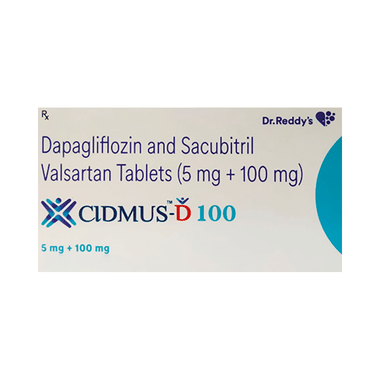
All Details About Cidmus-D 100 Tablet
Find out detailed description, uses, directions of use, side effects, warnings and precautions, frequently asked questions about Cidmus-D 100 Tablet
Description:
Cidmus-D 100 Tablet is a combination medicine used in heart failure. It helps reduce fluid buildup, relax blood vessels, and lower the workload on the heart, thereby improving symptoms and supporting better heart function.Take Cidmus-D 100 Tablet regularly at the same time each day as prescribed by your doctor. Do not stop or change the dose without medical advice, even if you feel better. Monitor your weight and symptoms such as swelling or breathlessness regularly and report any sudden changes to your doctor. Follow a low-salt diet, limit fluid intake if advised, and keep regular follow-up visits to monitor kidney function, blood pressure, and overall heart status.
There is limited data on the side effects of Cidmus-D 100 Tablet. Let your doctor know if you experience any symptoms that bother you or worsen while taking the medicine. They can suggest ways to treat or manage the side effects.
Do not use this medicine if you are allergic to any of its components or if you have a history of angioedema related to similar medicines. Inform your doctor if you have diabetes, are taking diuretics, or are at risk of electrolyte imbalance. Perceivek medical attention if you experience severe dizziness, fainting, reduced urine output, or swelling of the face, lips, or throat.
Uses:
Directions For Use:
Take this medicine in the dose and duration as advised by your doctor. Swallow it as a whole. Do not chew, crush or break it. Cidmus-D 100 Tablet may be taken with or without food.Side Effects:
Most side effects do not require any medical attention and disappear as your body adjusts to the medicine. Consult your doctor if they persist or if you’re worried about themOrdinary side effects of Cidmus-D
- Limited data available
Warning & Precautions:
FAQs:
How long does it take to see improvement after starting this medicine?
Do I need to continue this medicine if my symptoms improve?
What lifestyle measures should be followed along with Cidmus-D 100 Tablet?
What should patients monitor at home while taking this medicine?
Who should use this medicine with caution?
Written by:
Dr. T. Sharmila Krishna
M.B.B.S., MD (Biochemistry)
Reviewed by:
Dr. Sureshbabu Yadav
M.B.B.S., DIP.DIAB, F.R.S.H
Disclaimer:
Getomeds primary intention is to ensure that its consumers get information that is reviewed by experts, accurate, and trustworthy. The information and contents of this website are for informational purposes only. They are not intended to be a substitute for professional medical advice, diagnosis, or treatment. Please seek the advice of your doctor and discuss all of your concerns about any disease or medication. Do not disregard or postpone seeking professional medical advice because of something you read on Getomeds. Our mission is to support, not replace, the doctor-patient relationship.