
 Limited Stock
-
D-EDTA Pre-Filled Syringe (Rs.736.88)
Composition: Disodium edetate (37.5mg)
-
Edetamed 37.5mg Injection (Rs.464.06)
Composition: Disodium edetate (37.5mg)
-
Max-EDTA Injection (Rs.700.31)
Composition: Disodium edetate (37.5mg)
-
Edta Pfs Injection (Rs.749)
Composition: Disodium edetate (37.5mg)
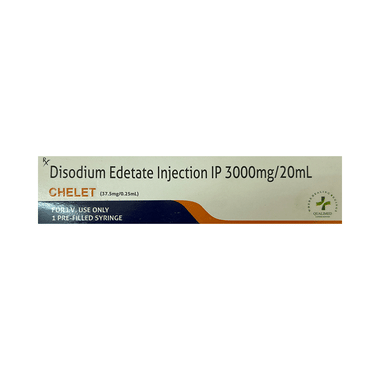
All Details About Chelet Injection
Find out detailed description, uses, directions of use, side effects, warnings and precautions, frequently asked questions about Chelet Injection
Description:
Chelet Injection is a medicine used to treat lead poisoning and other heavy metal toxicity. It binds to metals in the bloodstream, forming a stable compound that is safely removed from the body through urine. Removing these toxins helps reduce their harmful effects on organs and tissues.Chelet Injection is given by a doctor or a nurse, usually through a slow intravenous infusion or intramuscular injection. The dose and duration of treatment depend on the type and severity of metal poisoning, as well as the patient’s age and kidney function. Follow all instructions and complete the full course of treatment to ensure that the toxic metals are fully cleared from the body. Your doctor may advise increasing fluid intake and prescribe regular blood and urine tests to monitor metal levels and kidney function.
Some common side effects of Chelet Injection include pain or swelling at the injection site, fever, headache, nausea, or mild fatigue. In some cases, low calcium levels may occur, leading to symptoms such as muscle cramps or tingling. These side effects are usually manageable and temporary.
Chelet Injection should not be used in patients with severe kidney disease or known allergy to any of the ingredients in the product. It should be used with caution in people with heart conditions, liver problems, or low calcium levels. Pregnant or breastfeeding women should use this medicine only if clearly prescribed by a doctor.
Uses:
- Treatment of Poisoning
Directions For Use:
Your doctor or nurse will give you this medicine. Compassionately do not self administer.Side Effects:
Most side effects do not require any medical attention and disappear as your body adjusts to the medicine. Consult your doctor if they persist or if you’re worried about themOrdinary side effects of Chelet
- Nausea
- Vomiting
- Diarrhea
Warning & Precautions:
FAQs:
What is Chelet Injection used for?
What are the serious side effects of Chelet Injection?
Who should not take Chelet Injection?
What precautions should I take before using Chelet Injection?
Can Chelet Injection cause low calcium levels?
Written by:
Dr. Lokanish
M.B.B.S.
Reviewed by:
Dr. Sureshbabu Yadav
M.B.B.S., DIP.DIAB, F.R.S.H
Disclaimer:
Getomeds primary intention is to ensure that its consumers get information that is reviewed by experts, accurate, and trustworthy. The information and contents of this website are for informational purposes only. They are not intended to be a substitute for professional medical advice, diagnosis, or treatment. Please seek the advice of your doctor and discuss all of your concerns about any disease or medication. Do not disregard or postpone seeking professional medical advice because of something you read on Getomeds. Our mission is to support, not replace, the doctor-patient relationship.