
 Limited Stock
-
HPC Bismuth Tablet (Rs.206.25)
Composition: Colloidal bismuth subcitrate (120mg)
-
Bisvig 120mg Tablet (Rs.192.19)
Composition: Colloidal bismuth subcitrate (120mg)
-
Pylopic Tablet (Rs.215.6)
Composition: Colloidal bismuth subcitrate (120mg)
-
Pylobis Tablet (Rs.180)
Composition: Colloidal bismuth subcitrate (120mg)
-
Bisgram Tablet (Rs.215.6)
Composition: Colloidal bismuth subcitrate (120mg)
-
Bistas Tablet (Rs.206.2)
Composition: Colloidal bismuth subcitrate (120mg)
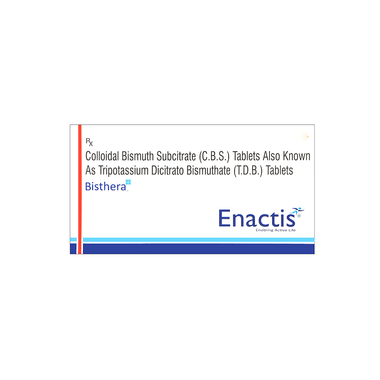
All Details About Bisthera Tablet
Find out detailed description, uses, directions of use, side effects, warnings and precautions, frequently asked questions about Bisthera Tablet
Description:
Bisthera Tablet helps to treat ulcers in the stomach and intestines. It is also used in combination with other medicines for the treatment of Helicobacter pylori infections.Bisthera Tablet should be used in the dose and duration as advised by your doctor. It should be taken at the same time each day to get the most benefit. Your symptoms may get better after a short time but do not stop taking it until you have finished a full course of treatment, even if you feel well. If you stop taking it early, some bacteria may survive, and the infection may come back.
The medicine is generally safe to use, however some may experience nausea, diarrhea, indigestion, abdominal pain, and vomiting as a side effect. These side effects bother you or will not go away, your doctor may suggest ways of preventing or reducing them.
Earlier taking this medicine, let your doctor know if you have any kidney or liver problems. Pregnant or breastfeeding women should also consult their doctor before taking it. Let your doctor know about all the other medicines you are taking because they may affect, or be affected by, this medicine.
Uses:
- Peptic ulcer disease
Directions For Use:
Take this medicine in the dose and duration as advised by your doctor. Swallow it as a whole. Do not chew, crush or break it. Bisthera Tablet may be taken with or without food.Side Effects:
Most side effects do not require any medical attention and disappear as your body adjusts to the medicine. Consult your doctor if they persist or if you’re worried about themOrdinary side effects of Bisthera
- Diarrhea
- Nausea
- Vomiting
- Indigestion
- Abdominal pain
Warning & Precautions:
FAQs:
What stomach problems is Bisthera Tablet commonly prescribed for?
Is this Bisthera Tablet used along with antibiotics for H. pylori infection?
Can this Bisthera Tablet help if I have recurring stomach ulcers?
How soon should my stomach pain improve after starting this Bisthera Tablet?
Will this Bisthera Tablet turn my tongue or stool dark?
Should I follow any specific diet while on this Bisthera Tablet?
What should I do if my stomach pain does not improve or gets worse?
Written by:
Dr. Lokanish
M.B.B.S.
Reviewed by:
Dr. Sureshbabu Yadav
M.B.B.S., DIP.DIAB, F.R.S.H
Disclaimer:
Getomeds primary intention is to ensure that its consumers get information that is reviewed by experts, accurate, and trustworthy. The information and contents of this website are for informational purposes only. They are not intended to be a substitute for professional medical advice, diagnosis, or treatment. Please seek the advice of your doctor and discuss all of your concerns about any disease or medication. Do not disregard or postpone seeking professional medical advice because of something you read on Getomeds. Our mission is to support, not replace, the doctor-patient relationship.