
-
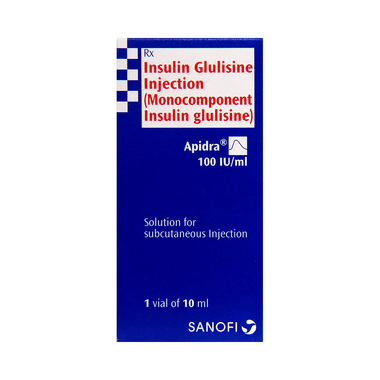
Apidra 100IU Cartridge (3ml Each) (Rs.920.68)
Composition: Insulin Glulisine (100IU)
-
Apidra 100IU Cartridge (Rs.761)
Composition: Insulin Glulisine (100IU)
All Details About Apidra 100IU/ml Solution for Injection
Find out detailed description, uses, directions of use, side effects, warnings and precautions, frequently asked questions about Apidra 100IU/ml Solution for Injection
Description:
Apidra 100IU/ml Solution for Injection is used to improve blood sugar control in people with type 1 and type 2 diabetes mellitus. It is a fast-acting type of insulin that helps to lower blood sugar levels after meals and reduce the chances of developing serious complications of diabetes.Apidra 100IU/ml Solution for Injection is normally prescribed along with a long-acting type of insulin or other diabetes medicines. Your doctor or nurse will teach you the correct way of injecting it under the skin. It should be taken 15 minutes before a meal or within 20 minutes after starting a meal. Do not stop taking it unless your doctor tells you to. It is only part of a treatment program that should also include a healthy diet, regular exercise, and weight reduction as advised by your doctor.
Check your blood sugar levels regularly, keep track of your results and share them with your doctor. This is very important to work out the correct dose of the medicine for you.
The most common side effects of this medicine include hypoglycemia, allergic reactions, injection site reactions, lipodystrophy, itching, rash, and upper respiratory tract infections. To prevent these, it is important to always inject the correct dose of medicine, have regular meals (do not skip), and monitor your blood sugar levels regularly.
Do not use this medicine when you have low blood sugar levels (hypoglycemia). Tell your doctor if you have ever had kidney, liver, or heart problems before starting treatment. Pregnant or breastfeeding women should consult their doctor before using it.
Uses:
Directions For Use:
Your doctor or nurse will guide you how to use this medicine.Side Effects:
Most side effects do not require any medical attention and disappear as your body adjusts to the medicine. Consult your doctor if they persist or if you’re worried about themOrdinary side effects of Apidra
- Hypoglycemia (low blood glucose level)
- Allergic reaction
- Injection site reactions (pain, swelling, redness)
- Lipodystrophy (skin thickening or pits at the injection site)
- Rash
- Itching
- Upper respiratory tract infection
Warning & Precautions:
Regular monitoring of blood glucose levels is recommended for dose adjustment.
Frequent and regular monitoring of blood glucose levels is advised.
FAQs:
I am taking pioglitazone for diabetes. Can I take Apidra 100IU/ml Solution for Injection with it?
I started using Apidra 100IU/ml Solution for Injection recently and was told to not inject into the same spot over and over again. Why?
What if I accidentally inject Apidra 100IU/ml Solution for Injection into a muscle?
I have been taking metoprolol for high blood pressure for a long time. Do I need to be careful about anything if I have started glulisine now?
Can Apidra 100IU/ml Solution for Injection be stopped once started?
Can Apidra 100IU/ml Solution for Injection cause hypoglycemia?
What class of drug is Apidra 100IU/ml Solution for Injection?
Written by:
Dr. Lokanish
M.B.B.S.
Reviewed by:
Dr. Sureshbabu Yadav
M.B.B.S., DIP.DIAB, F.R.S.H
Disclaimer:
Getomeds primary intention is to ensure that its consumers get information that is reviewed by experts, accurate, and trustworthy. The information and contents of this website are for informational purposes only. They are not intended to be a substitute for professional medical advice, diagnosis, or treatment. Please seek the advice of your doctor and discuss all of your concerns about any disease or medication. Do not disregard or postpone seeking professional medical advice because of something you read on Getomeds. Our mission is to support, not replace, the doctor-patient relationship.