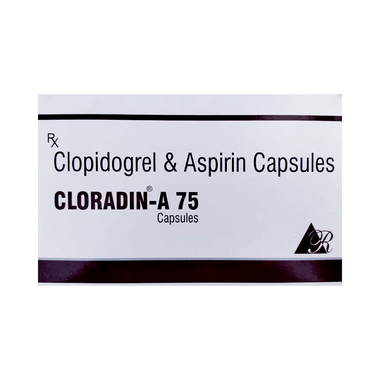

Find out detailed description, uses, directions of use, side effects, warnings and precautions, frequently asked questions about Cloradin 75mg/75mg Tablet
Cloradin 75mg/75mg Tablet is a combination of two antiplatelet medicines or blood thinner used to reduce the formation of harmful blood clots in blood vessels. It is used to prevent a heart attack or stroke in people with heart disease. It is also used to treat acute coronary syndrome (ACS).
Cloradin 75mg/75mg Tablet should be taken with food regularly at a fixed time each day. You should take it regularly at evenly spaced intervals as per the schedule prescribed by your doctor. Taking it at the same time every day will help you remember to take it. The dose and duration of treatment will depend on what you are being treated for. Do not stop taking it until you have finished the complete course, even when you feel better. Lifestyle changes like low-fat diet, exercise and not smoking may help this medicine to work better.
Ordinary side effects of this medicine include indigestion, bruising, and nosebleeds. This medicine increases your risk of bleeding, so it is important to be careful while shaving, cutting nails and using sharp objects. Usually, it is advisable to avoid alcohol intake while taking this medicine.
Earlier taking this medicine, tell your doctor if you have any liver or kidney disease. You must tell your doctor if you are pregnant, planning pregnancy or breastfeeding. You should also let your healthcare team know all other medicines you are taking as they may affect, or be affected by this medicine.
Uses:
Prevention of heart attack and stroke
Treatment of Acute coronary syndrome
Directions For Use:
Take this medicine in the dose and duration as advised by your doctor. Swallow it as a whole. Do not chew, crush or break it. Cloradin 75mg/75mg Tablet should be taken with or after food.
Side Effects:
Most side effects do not require any medical attention and disappear as your body adjusts to the medicine. Consult your doctor if they persist or if you’re worried about them
Ordinary side effects of Cloradin
Bruise
Gastrointestinal bleeding
Increased bleeding tendency
Nosebleeds
Warning & Precautions:
Alcohol
CAUTION
Alcohol should be used with caution while taking Cloradin 75mg/75mg Tablet.
Pregnancy
CONSULT YOUR DOCTOR
The safety of Cloradin 75mg/75mg Tablet during pregnancy has not been established. There are no adequate and well-controlled studies in pregnant women, and animal data on reproductive toxicity are insufficient. Your doctor will weigh the benefits and any potential risks before prescribing.
Breast feeding
CONSULT YOUR DOCTOR
Cloradin 75mg/75mg Tablet may be unsafe to use during breastfeeding. Limited human data suggests that the drug may pass into the breastmilk and harm the baby. It should be used only if the expected benefit outweighs the potential risk. Please consult your doctor.
Driving
CONSULT YOUR DOCTOR
It is not known whether Cloradin 75mg/75mg Tablet alters the ability to drive. Do not drive if you experience any symptoms that affect your ability to concentrate and react. Please consult your doctor.
Kidney
CAUTION
Cloradin 75mg/75mg Tablet should be used with caution in patients with severe kidney disease. Dose adjustment may be needed.
Liver
CAUTION
Cloradin 75mg/75mg Tablet should be used with caution in patients with severe liver disease. Dose adjustment may be needed.
FAQs:
Why have I been prescribed Cloradin 75mg/75mg Tablet?
You may have been prescribed Cloradin 75mg/75mg Tablet if you had a heart attack, were treated with stents in your coronary arteries, or had coronary artery bypass graft surgery (CABG).
Is Cloradin 75mg/75mg Tablet a blood thinner?
Affirmative, Cloradin 75mg/75mg Tablet is a type of blood thinner. It works by preventing platelets (type of blood cells) from sticking together and forming clots. This action of Cloradin 75mg/75mg Tablet helps in preventing conditions like heart attack or stroke in people with heart disease, who have recently suffered a heart attack or severe heart-related chest pain (unstable angina).
How long do I need to take Cloradin 75mg/75mg Tablet after stent insertion?
Your doctor will suggest the exact duration for which you may have to take Cloradin 75mg/75mg Tablet. The duration will be decided after considering various factors like the illness you are being treated for, type of stent inserted, any episodes of bleeding experienced by you during treatment, etc. Usually, Cloradin 75mg/75mg Tablet is prescribed for a minimum duration of 1 year. However, it is advised to follow your doctor's advice precisely to get maximum benefit of Cloradin 75mg/75mg Tablet. Do not stop the medication on your own, consult your doctor first. Sudden discontinuation may increase the chances of clot formation in the stent, heart attack and can even lead to death.
Can I drink alcohol while taking Cloradin 75mg/75mg Tablet?
It is not advised to take alcohol while taking Cloradin 75mg/75mg Tablet, as alcohol may increase your chance of stomach bleeding. As a result, you may vomit blood (which may be bright red blood or black/dark brown like coffee grounds) or you may have bloody or black tarry stools. Discuss with your doctor if you are not sure.
What is the most important information I need to know about Cloradin 75mg/75mg Tablet?
Cloradin 75mg/75mg Tablet may cause serious or life-threatening bleeding. Moreover, you may bruise easily and it may take longer than usual for bleeding to stop even if you have a minor injury like a small cut while shaving. Get emergency medical help if you notice excessive or prolonged bleeding. You should inform your doctor if you notice black tarry stools or if there is blood in the urine. Be vigilant on any signs of stroke such as sudden numbness or weakness (one side or both sides of the body), difficulty walking, mental confusion, slurred speech, dizziness and any unexplained headache. Contact your doctor immediately if you develop any such signs of stroke as stroke is an uncommon side effect of Cloradin 75mg/75mg Tablet and needs urgent medical attention as it can otherwise be fatal.
Do I need to stop Cloradin 75mg/75mg Tablet before surgery?
Your doctor will decide whether you need to stop taking Cloradin 75mg/75mg Tablet before any surgery or treatment or not. Usually, if a surgery or treatment is planned beforehand, the doctor may stop Cloradin 75mg/75mg Tablet a few days (usually 7 days) before the surgery or treatment owing to the increased risk of bleeding during the procedure. You should not stop taking Cloradin 75mg/75mg Tablet on your own without discussing it with your doctor.
Who should not take Cloradin 75mg/75mg Tablet?
Cloradin 75mg/75mg Tablet is not recommended for people who are allergic to it or any of its ingredients. Do not take Cloradin 75mg/75mg Tablet if you have or ever had severe liver disease, stomach ulcers, bleeding in the brain (stroke or a transient ischemic attack, also known as TIA), or if you have a bleeding disorder known as hemophilia (disease in which blood does not clot normally). Increaseitionally, avoid taking Cloradin 75mg/75mg Tablet if you are trying to get pregnant, already pregnant, or breastfeeding.
What if I forget to take a dose of Cloradin 75mg/75mg Tablet?
If you forget to take a dose of Cloradin 75mg/75mg Tablet, take it as soon as you remember. However, if it is almost time for your next dose, skip the missed dose and take the next scheduled dose. Do not double the dose to make up for the missed one as this may increase the chances of developing side effects.
What should I avoid while taking Cloradin 75mg/75mg Tablet?
Avoid activities that may increase your chances of bleeding. Be extra careful while shaving or brushing your teeth to prevent bleeding. Also, you should avoid taking painkillers, but if you need to take one like ibuprofen for joint pain, headache, backache, etc. then consult your doctor first. This is because taking pain killers with Cloradin 75mg/75mg Tablet may increase your chances of developing a stomach ulcer and bleeding. Refrain from taking excessive alcohol with Cloradin 75mg/75mg Tablet as it can irritate your stomach and lead to a stomach ulcer as well.
Written by:
Dr. T. Sharmila Krishna
M.B.B.S., MD (Biochemistry)
Reviewed by:
Dr. Sureshbabu Yadav
M.B.B.S., DIP.DIAB, F.R.S.H
Disclaimer:
Getomeds primary intention is to ensure that its consumers get information that is reviewed by experts, accurate, and trustworthy. The information and contents of this website are for informational purposes only. They are not intended to be a substitute for professional medical advice, diagnosis, or treatment. Please seek the advice of your doctor and discuss all of your concerns about any disease or medication. Do not disregard or postpone seeking professional medical advice because of something you read on Getomeds. Our mission is to support, not replace, the doctor-patient relationship.